
Born in 1799, Sir Roger Gresley grew up in troubling times. In spite of industrial progress, a twenty-year war with France touched all in Britain. A huge income from his Derbyshire and Staffordshire estates isolated Gresley from hardships which affected the majority. Yet the shadow of the French Revolution prompted Britain’s elite to cling tightly to their wealth and privileges.
Within a strict class structure, Gresley stood below the aristocracy in the highest rank of the gentry. A baronet, or hereditary knight, he had houses in London and South Derbyshire. An excellent linguist, fashionably dressed and courteous, Gresley became a Member of Parliament.
Gresley seemed to have everything necessary for a happy and successful life. However, his relationship with his mother became increasingly strained. Both courted the admiration of society’s elite, and spent money carelessly. From Gresley’s perspective, his mother contradicted his view of how a woman should behave in public. Eventually, he attacked her independence.
The Gresleys’ drama played out in the build-up to the 1832 Reform Act. From then on, Parliament slowly eroded aristocratic power and broadened the electorate. As a parliamentary candidate, Gresley at first resisted reform, then accommodated himself to it. His behaviour as a candidate illustrates the difference which the Reform Act made to local politics.
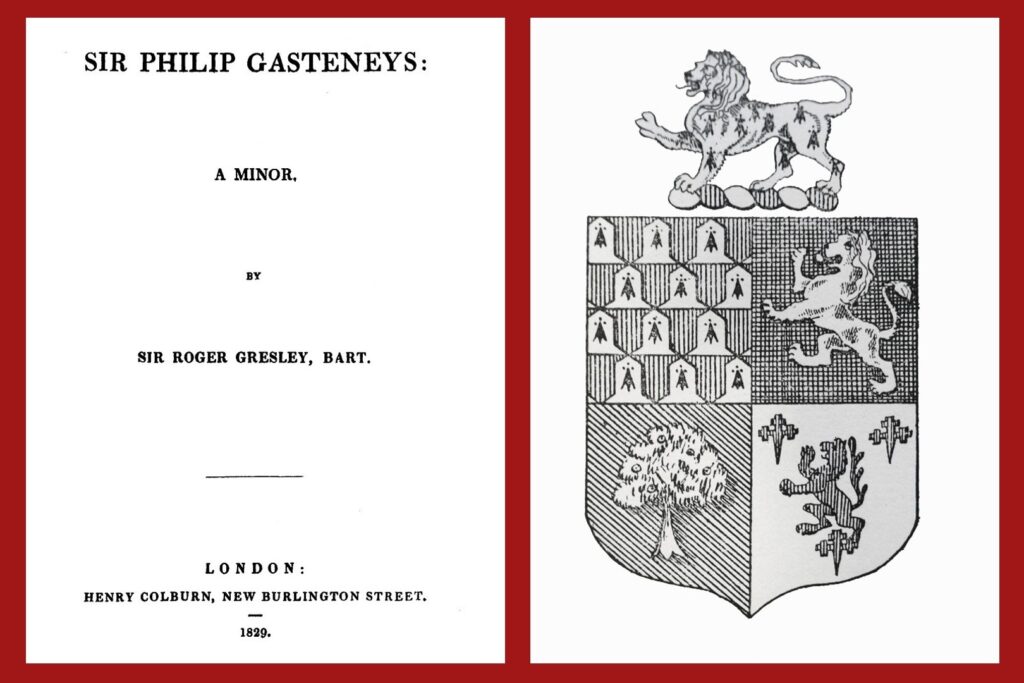
So, let’s examine the characters of mother and son. Sources for the early life of Sir Roger Gresley are limited. To understand his relationship with his mother during his childhood and teens, we’ll consider both newspaper reports and Gresley’s 1829 novel which, in part, parallels his youth. Then, we’ll follow the paths of mother and son separately, and view their choppy interactions.
Chapter One: Gresley’s Early Years in Reality and Fiction
Sir Roger’s Blessing and Curse
Roger’s father, Sir Nigel Bowyer Gresley, owned estates in Derbyshire and Staffordshire. In 1808, Sir Nigel’s health declined. The family travelled to Bath in hope of a cure. There, he died, aged 55. Roger was eight years old.
In marrying Maria Garway of Worcester, Sir Nigel had increased his wealth. Although an heiress, Dame Maria’s capital was tied to legal arrangements. In her new-found freedom as a widow, these proved annoying.
Sir Nigel left a will, but failed to appoint trustees to protect his children’s inheritance. As heir of a fortune, Sir Roger Gresley became a ward of court. Until he was twenty-one, his legal rights came under the ultimate protection of the Court of Chancery. A judge appointed Sir Nigel’s widow and three male relatives to ensure that Sir Roger’s assets were used solely for his benefit. From Dame Maria’s perspective: why should these men interfere in what I believe best for my son?
Dame Maria soon fell out with her colleagues. She wanted to educate her son at her Worcester home. One guardian, the Revd William Gresley of Netherseal, insisted Sir Roger should go to a public school. He thought Maria fanciful and lacking in judgment. When asked to settle the dispute, the Court of Chancery ruled in Maria’s favour. In protest, William Gresley resigned his guardianship.
From the first page of Sir Roger’s semi-autobiographical novel, it’s hero’s attitude to his parents is sour. His father erred in dying young, leaving him to the care of his mother. She devoted herself to him but made poor choices about his welfare. Her affection for him was superior to her judgment. Her gusts of passion led to extravagance and meanness. This looks like an angry assessment of Dame Maria by a son whose understanding of his mother was limited.
Sir Roger Gresley Hatched a Bad Idea
In 1820s London, Gresley met publisher Henry Colbourn. Colbourn recruited men with titles to write about aristocratic manners and pleasures for readers who wanted to adopt gentry ways. Many novels he published included veiled portraits of real people, and Colbourn persuaded numerous authors to sign unwise agreements.
Gresley’s novel, Sir Philip Gasteneys: a Minor, tells of a young baronet who fell out with his mother and travelled in Europe. Before finding a bride worthy of him, Gasteneys pursued affairs with a fortune hunter’s daughter, a married lady, and an Italian countess. He viewed his promiscuity as an expression of his generous nature. He claimed for himself a strong moral character but treated his ex-lovers and their relatives shabbily.
The Spectator considered the novel worthless: a mix of ill-disguised sensuality and unconscious ignorance. How could a man who seduced women and abused the confidence of friends claim to be decent and honourable? The Spectator blamed Gresley’s bad education.
Sir Roger Gresley saw his novel as a morality tale. He wanted to deter young aristocrats from gambling and sexual adventures. True, he’d drawn on experiences of himself and others but his book was fictitious.
Despite the obnoxious attitudes of the novel’s hero, I don’t see Gresley as a sexual predator. His novel packs lengthy affairs into a short period; they can’t all be Gresley’s. Probably, none of them were. However, the main character’s mother and bride offer parallels with Gresley’s life. And the book adds an inner voice to evidence of a more factual kind.
Sir Roger Gresley Frowned on his Education
Gresley came to resent his home education, though private tutors were commonplace in gentry households. Dame Maria held strong opinions, and probably gave her son’s teachers clear guidelines. Later, she may have sent him to a village rectory where a clergyman prepared him for university. The novel portrays such a time as intellectually stimulating but otherwise dull.
At Christ Church, Oxford, Sir Roger Gresley wrote a mourning poem on the death of Princess Charlotte and showed enthusiasm for extra-curricular activities. He gambled and hunted, principally with sons of the Earl of Coventry. Later, he claimed that slow recovery from a riding accident forced him to give up his studies. Yet his mother expected him to return to Oxford. He may have glossed over the truth to portray himself in a better light.
Gresley’s avatar in the novel, Philip Gasteneys, felt his home education set him apart from high-ranking undergraduates. Thus, he spent lavishly on hunting, parties and gambling to win their favour. As for his failure to take a degree: Oxford focussed too much on Latin and Greek. It ignored his liking for history, philosophy and the fine arts.
Of these two accounts, the latter seems more honest. The novel offers a spicier version of Gresley’s teenage years but reflects the tenor of his life. Sir Roger felt a need to push himself forward in elite society. Did his resentment of his mother focus on the way she distanced him from young noblemen? If so, her failure to provide a public-school education was a secondary issue for Gresley.
Chapter Two: Gresley and his Fictional Character Fall in Love
Finding a Potential Bride
Newspapers summarise Gresley’s courtship but say nothing of qualities he sought in a bride. Later, they record his wife’s presence at events and parties. Beyond that, little evidence of her life exists.
Gresley’s novel offers a sense of its main character’s ideal life-partner. Although a fictional story, it parallels events in Gresley’s life. The author’s voice offers a romanticised perspective on finding a wife.
The character, Philip Gasteneys, befriended Lady Editha Lincoln’s brothers at Oxford. Warm and innocent, she disapproved of their excessive pursuit of pleasure. Gasteneys quickly came to revere her, and wanted to be worthy of her. He believed her love would save him from uncontrolled passion. In one scene, he lay in bed with a fever, close to death. The soft touch of Editha’s delicate hand on his brow promised life and joy.
Innocence, Editha’s greatest charm, implies child-like qualities. Charm, however, suggests feminine magic. The innocence Gasteneys sought related more to modesty in manners than to anything deeper. A woman who appeared pure and gentle, who displayed restraint and rational virtues, would submit to the governance of a worldly-wise husband, in public at least.
In addition to innocence, Gasteneys wanted a companion who would be his equal in riding, poetry and cultural pursuits. During an earlier affair with a married woman, Gasteneys spent hours in her tastefully decorated apartment. This included a conservatory for scented houseplants and an aviary of canaries, thrushes and bullfinches. Together in her boudoir, they discussed books and prints. Often, he sung to music she played on her piano or harp.
This picture of Gresley’s ideal bride, helps explain his antipathy to his mother. Dame Maria was impulsive, forthright and waspish. Worse, from his point of view, she transgressed elite society’s gender boundary by entering public life.
Sir Roger Gresley Thwarted in Love
Moving from the novel to Gresley’s real-life experience, he met Lady Sophia Coventry in 1819. He’d become friends with her brothers at Oxford, and they invited him to a shooting party at their country seat. The Earl of Coventry’s mansion, Croome Court, was a nine-mile ride from Dame Maria’s Worcester home.
During elite society’s social season, the Coventry’s invited Sir Roger Gresley to dine at their London home. Now in love with Lady Sophia, his visits became more frequent. He even followed the family to the spa at Cheltenham under the guise of needing to take the waters. The Earl told his sons: Gresley turns up too often.
In September 1819, Gresley asked the Earl’s permission to marry Sophia. Until that moment, the Earl had no idea of Gresley’s interest in his daughter. A hunting accident had left him partially sighted in one eye and blind in the other. And courtships in elite society proceeded only with the approval of the couple’s families. Sophia was still seventeen, and the Earl feared that a youthful marriage might prove unhappy.
The Earl asked Sir Roger for a statement of his property. On receipt of a satisfactory letter from Gresley’s solicitor, the Earl wrote to one of Gresley’s guardians to check its accuracy. Gresley would receive an income of £6,000 a year. However, he couldn’t make a marriage settlement on Sophia until he was twenty-one. So, the Earl forbade an immediate marriage, refused to let the couple meet alone, but allowed Gresley to visit his family.
Gresley tried to change the Earl’s mind. In November, the Earl entertained the Duke of Gloucester to dinner. Sir Roger Gresley urged the duke and other high-ranking guests to persuade the Earl to let him marry. The Earl remained adamant that Gresley must wait.
Gresley’s Mother Puts her Foot Down
When Dame Maria heard the news her son had failed to share, she wrote to the Earl’s wife. She wanted her son’s courtship to cease, and to shelve all communication between the Gresley and Coventry families. The Earl and Countess disagreed.
Why Dame Maria opposed the match is unclear. Rules of etiquette limited the extent to which letters could be straightforward. Personal desires had to be expressed in an acceptable way.
The most obvious explanation is that she wanted her son to return to Oxford. In this respect, she probably considered the Earl’s sons a bad influence. One of them had recently accompanied Roger to the Netherlands.
Beyond this, she held a prejudice against the Earl. As a young man, he’d eloped to Gretna Green with Lady Henley, and within a year was engaged in an affair with a baronet’s wife. And now this unscrupulous man had enquired into her son’s fortune. Was he trying to entrap Roger?
Gresley’s Break with his Mother
In 1820, Dame Maria asked the Court of Chancery to bring her son into line with her wishes. The Earl ridiculed her theory that he intended to secure Gresley’s fortune for his daughter. Gresley’s other guardians agreed Lady Sophia was accomplished and amiable, and believed the Earl would provide for her. The judge ruled that until he was twenty-one, Sir Roger Gresley must not travel abroad nor marry Sophia without the court’s consent.
According to Gresley’s novel, its main character, Sir Philip Gasteneys, suffered from his mother’s prejudice against his marriage to Lady Editha. She told the Lincolns of her son’s excesses and said he’d never reform. Gasteneys cursed her for her spite, and for wanting him to sacrifice everything to her whims.
Later, Gasteneys heard his mother was dangerously ill. Desperate to receive her pardon, he raced to London. He arrived too late. Thoughts of her unkindness vanished. He remembered only her care.
This imagined scene suggests Gresley hoped for reconciliation with his mother. Children generally want to think well of their parents, even when they believe a parent behaved badly. The story doesn’t depict reality, but may reflect Gresley’s ambivalent feelings.
Shortly after Lady Gasteneys’ death, the novel ends. Gasteneys’ dream girl agrees to marry him.
Sir Roger Gresley Comes of Age
In December 1820, Gresley gained control of his fortune. In today’s terms, he inherited an income of £400,000 a year, plus two million from income accumulated in his minority.
To celebrate his independence and secure his position as their new lord, Gresley invited workers on his South Derbyshire estates to feast on roast beef and plum pudding at Drakelow Hall. Beer flowed, and all rejoiced.
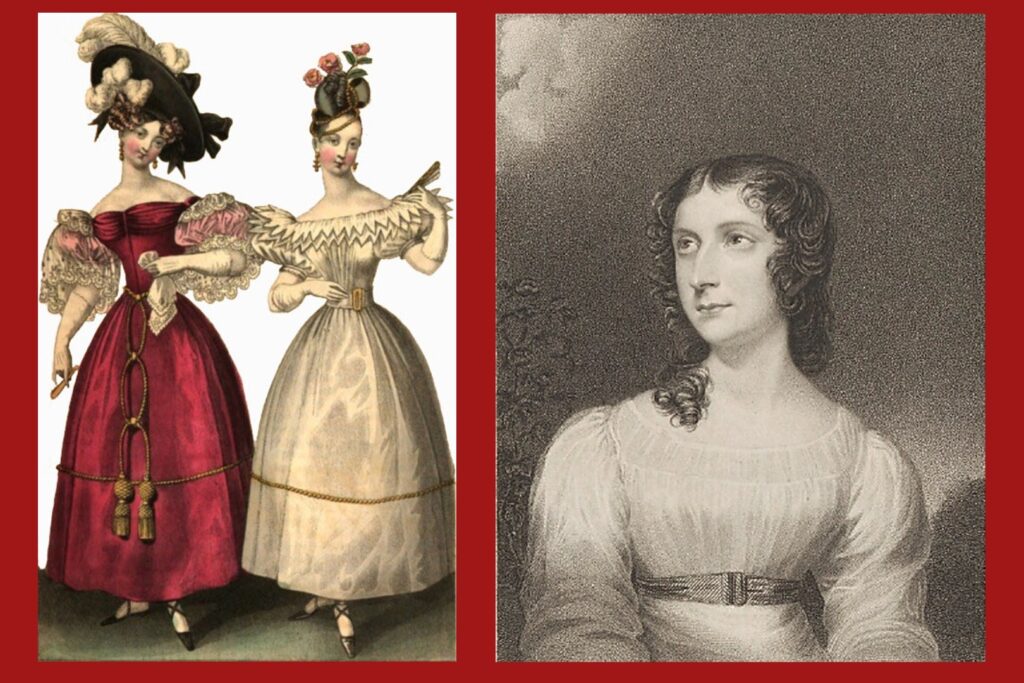
Six months later, Roger married Sophia at the Coventry’s house in Piccadilly. Tall, handsome and stylishly dressed, the groom exchanged vows with a bride who, according to a friend, possessed every gentler grace which best adorns the female race. After an elegant entertainment, the couple travelled north in Gresley’s carriage.
Dame Maria did not attend the wedding. Subsequently, she refused to receive Lady Sophia. She and her son stayed in touch but rarely met.
After the honeymoon, Gresley invited his people to a celebration at Drakelow. Over 400 labourers and their families, feasted in an outbuilding. And as a recently appointed captain in the Staffordshire Yeomanry, Gresley commanded his cavalry troop’s manoeuvres in the park to the sound of the Burton Band.
Later, Sir Roger and Lady Sophia entertained a hundred of Gresley’s principal tenants in the dining room. After a splendid meal, Gresley proposed toasts with great liveliness. At 10.00 pm, the men joined their female relatives in the ballroom for country dancing. This continued into the early hours.
A quieter character than her husband, Lady Sophia never attracted the attention of the press. Newspapers recorded the couple’s social engagements, and her ladyship’s presence at political dinners. A burglary at their London house revealed she owned jewellery worth £1,500, including a gold tongue scraper. Beyond that, her life remained private.
Chapter 3: Dame Maria’s Exit from Elite Society
Lady Gresley’s Entertainments
Dame Maria hosted parties for stylish people. Newspapers noted private concerts at her London mansion where prestigious musicians performed. Tickets sold at half a guinea each. As she said, however: my social position prevents cash transactions at the door.
Once, an Italian soprano, Madame Ronzi de Begnis, sung arias from comic operas. On another occasion, Miss Honoria Ashe sang in a duet by Rossini, then played a piano concerto by Ignaz Moscheles in the presence of the composer.
In 1824, Miss Macauley recited her Romantic poem on Mary Queen of Scots. Dame Maria’s friends applauded her for her passion and vigorous presentation. A critic said: Macauley left nothing to the imagination, not even for the deaf.
After each performance, Dame Maria provided plentiful refreshments. Then, the company danced quadrilles into the early hours.
Patronising the arts required money. Dame Maria had a good income but no control over her capital. Running short of funds, she devised a way to sell stock to the value of £2,600 which her grandchildren were meant to receive when she died. In short, she stole it, though probably she considered it hers. Why should she allow financial restraints imposed by her father and husband to bind her?
Did Sir Roger Gresley know in detail of his mother’s careless attitude to money? He must have known what she was like, but for the short term her theft remained hidden from her family. In the light of her attitude to his wife, Gresley may have tried to put his mother out of his mind.
Dame Maria helped Sir Roger
In 1824, at the age of 54, Dame Maria moved from Marylebone to Mayfair. She decided to learn Latin, engaged a private tutor and bought the necessary books. My sources don’t say why she wanted to improve her education. However, tongue-in-cheek articles in the press spoke of a university for women. Pat’s Pry Journal joked: Lady Gresley should get the post of chief debater.
Sir Roger Gresley wanted to enter Parliament. He didn’t ask his mother to help, though he expected her support in 1825 when he hoped to become an MP for Worcester. She decided to help, and lost him good-will. Later, she told him not to stand for Evesham or Lichfield. He ignored her advice, and failed to become a candidate. They wanted each other’s affirmation or felt a need for connection, yet ended up bickering.
Dame Maria heard of an opportunity for her son at Berwick-upon-Tweed. A false rumour had spread that one of its MPs planned to sail to the East Indies. When voters approached a Liverpool merchant to replace him, the MP was furious. Then her ladyship strode into town with her retinue, put them up at the Hen and Chickens, entertained voters and pleaded the cause of her son. In the process, she ran up a bill of £810, of which she paid £500.
Gresley received the complaints. On advice, he applied to the Lord Chancellor to certify his mother as a lunatic; she was too eccentric to manage her finances.
Eight months later, in November 1826, Gresley and his mother called a truce. Both were strong willed. Neither wanted to back down. Yet an argument played out in court demanded deep pockets. In ending it, they tried to protect their reputations. Roger said: I misunderstood the facts. Maria said: I’m sure your motives were good. Outside the courtroom, she threatened to prosecute all who’d supported her son’s accusation.
Goings-on in Mayfair
When in London, Dame Maria often invited friends to dinner. Her footmen, dressed in sky blue and crimson livery with large epaulets, served food and wine.
After dinner, she took guests to a play or opera. She’d set off in her carriage, with her friends following her in a procession of hackney coaches. She left it to a footman to pay the fares, though the chances of her repaying him were slim.
In August 1828, her ladyship’s coachman annoyed her. She dismissed him. He asked her to settle his account. She refused to pay the whole amount.
A few male servants took the coachman’s side. They decided to keep the gentry in the house until wages were paid. Thus, they barricaded doors and windows.
When a young gentleman in the house tried to escape, Dame Maria’s two butlers ran towards him armed with kitchen pokers. Seizing the drawing room poker, he held his own. Iron pokers bent double. Then, with the help of a footman, he got away and ran to the magistrates’ office.
Meanwhile, her ladyship and a maid reached a second-floor bedroom which faced the street. From the window, they cried: Murder! This attracted attention. Hundreds gathered, including numerous carriages. Neighbours felt unsafe.
When the magistrates arrived with a posse of officers, the servants refused to open the door. It took six blacksmiths forty-five minutes to break it down with sledge-hammers and crowbars. The officers entered with cutlasses drawn. The servants, now drunk, surrendered.
A Cook’s Experience
In September 1828, Dame Maria employed Harriet Bailey as her cook. Tradesmen no longer supplied her with goods on credit. Servants had to drink water, and seldom had meat. The house felt miserable. Bailey had no opportunities to use her skills. Her ladyship lived chiefly on chickens.
One day her ladyship appeared in the kitchen with a sword in her hand. She flourished it over Bailey’s head, saying: I can wield a sword as well as an army man!
After two weeks, Bailey left. Later, she called at the house to collect her clothes. Her ladyship refused to let her have them, or any wages.
Bailey went to the magistrates’ office, where Sir George Farrant did his best. He sent his officer to the house. Her ladyship told the officer she couldn’t hand over the cook’s clothes until she’d consulted her solicitors. Farrant thought this absurd, and sent the officer back. This time her ladyship made no reply. She flounced out of the house with an air of contempt.
By not paying her servants, Dame Maria showed herself unjust and uncaring. Beyond that, she’d lost touch with reality. And as her drama filled newspaper columns, she lost her friends. Possibly these relationships were quite superficial anyway. Possibly she was lonely. Sir Roger Gresley stayed well clear; to him she was probably an embarrassment.
Dame Maria’s Debts Catch Her Up
Tradesmen took Lady Gresley to court to recover money due to them. She owed £82 for port, sherry and gin, £163 for butter and cheese, and £2,000 to her solicitors. In addition, her former servants claimed their wages. She owed her lady’s maid £300, and her housekeeper of sixteen years standing, £500.
Dame Maria’s defence consisted of obvious lies. When her Latin teacher demanded £30, she said she’d never employed him. Her butler’s solicitor suggested she resisted full payment of every debt because she thought all who asked her for money were taking advantage of her.
One magistrate said: Lady Gresley doesn’t behave like a woman of sense. Her former coachman replied: She has enough sense to engage servants to do her business. And enough to discharge them for conspiracy or impertinence when they demand payment.
Why was Dame Maria so careless with her money? She’d lived with wealth and probably assumed she always would. She felt entitled to it. She spent to maintain her social position and impress friends. In failing to settle debts, she must have realised her income wasn’t equal to the task. Probably, she expressed indifference to accounts and any suggestion of budgeting. She failed to face reality, and felt the lower orders hatched plots to rob her. If her son offered help, her independent spirit would deflect it.
Chapter 4: Sir Roger Gresley’s Bumpy Career
Political and Social Ambitions
I’ll return to Dame Maria later. This chapter will focus on Sir Roger Gresley’s activities following his marriage to Lady Sophia. In December 1820, he reached the age of 21. From now on, his life was in his own hands.
Gresley’s efforts to enter parliament during the 1820s failed. To become a candidate, he had to court independent voters and aristocratic landlords who controlled seats. He also needed to prove himself public spirited. So, Gresley became a magistrate and a governor of the Derbyshire Royal Infirmary. All this took money.
In 1823, Prince William, Duke of Gloucester made Gresley the Groom of his Bedchamber. This was a prestigious post for a gentleman, and took little of Gresley’s time. The duke informed him about parliamentary business, and honoured Gresley’s Derbyshire mansion with a visit. On the debit side, he stressed his royal status, expected gentlemen to stand in his presence, and often made foolish remarks.
Many of the elite with whom Gresley associated were obsessed with status and prestige. The hero of Gresley’s novel, with whom he identified, avoided gatherings which ignored class barriers. Sir Philip Gasteneys couldn’t bring himself to shake hands with a banker’s clerk, or listen to an inferior’s barbaric views.
To mix with people of rank and fashion, Gresley raced horses. At Lichfield, he struck a £50 wager with the Earl of Chesterfield. Then, in a one-mile match, Gresley’s Hero beat Chesterfield’s Heathen by half a neck. At Derby in 1822, Gresley entered Patriarch in the ten guineas sweepstake. Other owners in the race included the Duke of Devonshire and Sir George Crewe.
Gresley’s Mansion and Estates
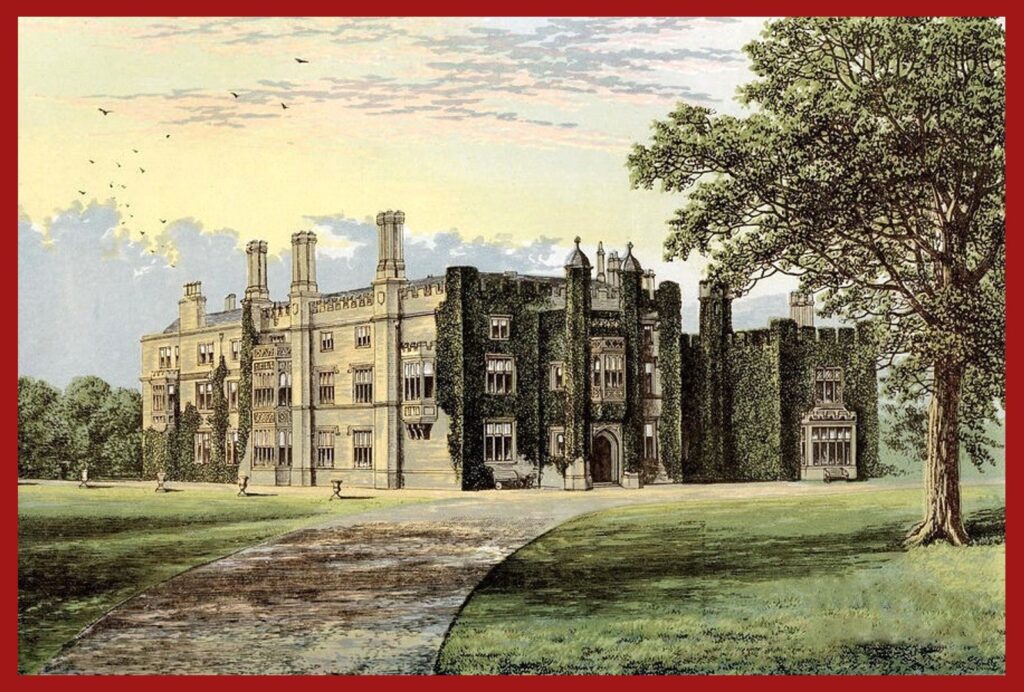
Drakelow Hall stood above the River Trent, four miles south of Burton. It contained over twenty bedrooms for family and guests. One of its glories was a dining room with a continuous landscape painted around the walls and into a coved ceiling. Among treasures guests could admire was a pendant given by Queen Elizabeth I to a Gresley ancestor. Ever keen to impress, Gresley rebuilt the west front in Elizabethan style, added a billiard room with a bedroom above, and made a magnificent entrance on the south side.
Around the hall, lay seven acres of pleasure grounds with flower gardens and walks lined with yews. Beyond, 150 deer grazed a park which could accommodate ninety soccer pitches. Within this park lay a mile-long avenue from the entrance gate to the mansion.
Gresley made key decisions about his properties, but relied on an agent to supervise projects. He expected gentleman farmer Henry Cooper to maximise income. When William Ward of Warren Farm got behind with his rent, Gresley ordered the seizure of Ward’s goods to the value of the debt. When tenants asked him to improve land or buildings, he acted slowly.
In 1823, Lady Sophia gave birth to a daughter who died a month later. Another pregnancy left her so ill, Gresley feared she would die. By 1830, it was clear he would have no natural heir.
Gresley had already begun to sell property at a rate which would increase his income over a long period. For example, he sold his grandfather’s Staffordshire canal in 1827 and properties in Church Gresley the following year.
Sir Roger Gresley and his Guests
General William Dyott lived near Lichfield and occasionally dined at Drakelow. Gresley’s lifestyle astonished him: fine for someone with £20,000 a year, but not £8,000. Sir John Benn Walsh, a university friend, was also mystified: Sir Roger must be deeply injuring his fortune; he leads a strange, scrambling life. Like his mother, Gresley managed his financial affairs badly.
Dyott could not fault Gresley’s dinners. He produced eight sorts of wine, four of them in massive silver ice pails. He found Sir Roger a lively host, but thought he overestimated his skills and competence.
In his diary, Dyott commented on Gresley’s guests. He saw the Earl of Chesterfield, who lived nearby at Bretby Park, as good-humoured but shallow.
Dyott disliked the Marquess of Londonderry: full of ostentation and silly pomp. The Marchioness was perfectly attuned to her lord’s character, though attractive and superbly dressed.
Forty years older than Gresley, Dyott despised the manners of a younger generation. Yet their easy-going, class-conscious façade, hid more substantial characters beneath. Outwardly, they revealed no emotion, unpleasantness or controversy. And yet they had power, and knew how to get what they wanted.
Gresley courted Londonderry’s political influence. Contemporaries thought the marquess a man of modest ability. Yet he fought in the French wars with the rank of colonel, worked as a diplomat, and sat in the House of Lords. His marchioness was a political hostess and strong-minded business woman.
Gresley Enters and Exits Parliament
George IV’s death in June 1830 triggered a general election. Londonderry had large landholdings in County Durham and arranged for Sir Roger Gresley to become a Tory candidate. He expected Gresley, if elected, to help him get command of a regiment.
Gresley’s Whig opponents ridiculed him as a stranger to Durham and a writer of cheap fiction. Gresley spent heavily, and received skilled help. Now aged 30, he won the seat.
The Tories of 1830 divided into two factions: Liberals and Ultras. Liberal minded Tories had supported the Duke of Wellinton’s decision in 1829 to give Roman Catholics the right to enter Parliament. Strongly opposed to this, many Ultra MPs now voted with the Whigs. Elected as an Ultra, Gresley voted against them to support the Tory government’s grant to the new king, William IV.
Disillusioned Durham voters petitioned Parliament for Gresley’s removal as their MP. They offered evidence of payments he’d made to get elected. In March 1831, he ceased to be an MP for Durham.
Meanwhile, Gresley negotiated with a Kent landowner who controlled New Romney’s parliamentary seats. Thus, a week after his removal, Gresley returned to the House of Commons.
His triumph was short-lived. The Duke of Wellington resigned as Prime-Minister because he expected the Whigs to win a debate about parliamentary reform. Earl Grey’s new Whig government then introduced a Reform Bill which failed. So, Grey called a general election in which the key issue was reform of Britain’s electoral system.
At the 1831 election, feeling ran high among voters and non-voters alike. The Duke of Newcastle nominated Gresley as a candidate for Newark, near Nottingham. He also ejected tenants who said they’d vote for the Whigs. Several times, a crowd tore Gresley’s coat off his back. Special constables guarded him. Eventually, he fled to Derby. Like many non-reform candidates, Gresley lost.
The Reform Act Election
The Whigs’ Reform Bill became Law in June 1832. Boyd Hilton estimated that it increased voters from 3.2% to 4.7% of the population. It also redrew the electoral map, and countered some abuses in the system. Some feared it might spark revolution. Its immediate effect was another general election.
Gresley stood for the new constituency of Southern Derbyshire. His Whig opponents, Baron Waterpark and George Vernon of Sudbury Hall, campaigned to extend the Reform Act and limit the influence of private interests. Gresley said he’d devote himself to making the Act work efficiently, and to reducing taxes and government spending.
In November, Gresley made a public entry into Derby for a Tory dinner. As his carriage drove into town, gentry and farmers on horseback gathered round him. Some held aloft flags which displayed Tory mottoes. A band played as they progressed.
Non-voting activists who supported reform, collected stones and brickbats into piles along Gresley’s route. They hurled these into the parade. Some Tories received serious injuries. Those who’d brought wooden poles to defend themselves, failed to disperse the mob. The mayor called in the police.
In December’s election, Veron and Waterpark won. Although Gresley lost, he healed the Southern Derbyshire breach between Ultra and Liberal Tories. In private company, he appeared sore and sour.
Gresley’s Pressure Tactics
Two weeks before voters went to the polls The Chesterfield and Derby Reporter published signed witness statements of shady Tory tactics. Gresley called these statements lies and libels. Yet they read as true, and Tory denials supported them in part.
For three months, Gresley and other Conservative agents visited voters. They asked voters to promise one of their two votes to Gresley. Until 1872, voting was public, generally in the presence of candidates’ agents.
William Wilden was a partner in a Newhall pottery. Their premises bounded a ditch belonging to the Earl of Chesterfield, and they’d filled the ditch to support a wall. The Earl’s steward visited Wilden to secure a vote for Gresley. Wilden, however, had promised his votes to the Whigs. Thomas Hassall mentioned re-opening the ditch, and said: if you are not with us, we’ll make you cry. When the story became public, Hassall denied it.
Gresley’s agent visited Joseph Norton of Cauldwell to ask for one of his votes. A 68-year-old gardener who owned a plot of land, Norton had promised his votes to Vernon. He told Henry Cooper: I won’t break my word. Cooper then touched his shoulder and said: Don’t forget, Sir Roger employs your son in his gardens.
At Drakelow Hall, the head-gardener said to John Norton: Your father’s promise to Vernon angered Sir Roger. Another servant suggested Gresley would sack him. So, John tackled Gresley, who proved evasive. John told his father: in your situation, I wouldn’t break my word for twenty pounds.
When Gresley saw printed hand-bills with statements from the Nortons, he reacted. He dismissed John Norton for libel, for conspiring against him, and for being an enemy spy. Gresley expected total loyalty from his dependents, and believed this just. Yet in making his judgment public, he exposed his injustice.
Sir Roger Gresley Fights Again
By July 1834, the Whig government had become chaotic. In October, the Houses of Parliament went up in flames. The king looked to the Tories for a prime minister, and Sir Robert Peel called a general election.
Gresley stood for Southern Derbyshire again. He accepted the Reform Act as irreversible, and addressed the concerns of old and new voters. In particular, he would work to repeal the malt tax which reduced brewers’ profits and increased the price of a labourer’s pint.
In December, Gresley visited Newhall and Swadlincote. At Gresley church, supporters took the horses from his carriage and pulled it themselves. In Swadlincote, an enthusiastic crowd welcomed him.
January’s election brought no complaints of Gresley using intimidation. Instead, he reduced his tenants’ rents by ten percent. Lullington farmers gave him both their votes. Overall, he won 28% of votes cast in a race with four candidates. Vernon and Waterpark lost. Gresley and Sir George Crewe of Calke Abbey entered Parliament.
The 1835 election resulted in a minority Conservative government. In March, the House of Commons debated a motion to repeal the malt tax. Ministers wanted to keep it. Gresley voted with them.
Gresley’s breach of promise disgusted Dyott: my cousin made an ass of himself, and exposed his character in a snivelling speech; just as I expected. He saw Gresley as a man who invariably tried to impress the influential. Gresley said: I didn’t realise how much money the tax brought in, nor how necessary it is to public finances.
Chapter 5: Endings
Mother and Son’s Fading Influence
In early 1829, as Sir Roger Gresley pursued political success, his mother’s debts landed her in the King’s Bench prison at Southwark. For ten guineas, she could get a larger room with her own furniture and bedding. She probably lived in relative comfort, though the prison was crowded and dirty.
Gresley reached a financial agreement with her in June 1830. Dame Maria had a life-interest in several estates. From these, she received over £2,000 a year but could not touch the capital. Gresley agreed to pay £5,000 to clear her debts. In return he would get her income, and pay her £500 a year. He thus gained control of her finances. By 1834 he was turning a profit.
Did Gresley realise his mother had effectively robbed her grandchildren of £2,600 by dishonest trading? In 1836 the grandchildren tried to recover the amount, and produced a letter which suggested Gresley knew of her crime. Gresley swore on oath he had not. The judge accepted this, and hoped family members would reconcile their differences out of court.
In October 1836, Gresley fell from his horse. A few days later, he had a sudden attack of paralysis, probably a stroke. Physically and mentally his health deteriorated.
Determined to carry out his public duties, Gresley remained active as an MP. However, he did not stand as a candidate in the 1837 election.
To finance his passion for high society and political success Gresley had sold many assets, including land and buildings in Church Gresley. By 1837, he was heavily in debt and desperate for funds.
Gresley consulted William Mousley, his Derby solicitor. He still owned manorial and mineral rights in the Church Gresley area, where potteries and coalpits had mushroomed. Gresley sold his rights in these enterprises to Mousley for £13 an acre. Their real value was higher.
Mother and Son Reunited
On 11th October 1837, Gresley directed improvements to his pleasure grounds and entertained friends for dinner. Later, during a discussion in the drawing room, Gresley went upstairs to fetch a book on roads. Suddenly, he felt faint and breathless. Informed by a servant, his wife ran to his room. He spoke her name: Sophy. And died.
Aged 37 at his death, Gresley’s estate was worth £14,000. It’s value sixteen years earlier was £180,000. His successor in the baronetcy had to sell his Lullington estate to pay his debts.
Released from prison in 1830 and with her wealth diminished, Dame Maria moved to Cheltenham. Once a fashion icon, her appearance now brought ridicule. She attended public entertainments, usually with a newspaper under her arm. At a violin concert, she sailed unsteadily about the room, a vision of scarlet satin and ostrich feathers. A report of the event implied she’d imbibed too much gin. Just as likely, she was becoming less mobile. A few years later, she became confined to a wheelchair. She died in 1840 at the age of seventy.
In 1857, Sir Thomas Gresley claimed that Sir Roger’s solicitor cheated him when he bought his mineral rights. An experienced mining engineer had told Mousley they were worth over a £100 an acre. Mousley never passed this information to Gresley. Indeed, evidence that Mousley paid the agreed price of £6,940 was lacking. In 1862, the court accepted the mineral rights could not be recovered. Mousley’s heirs had to pay Sir Thomas the purchase money plus interest.
6. Conclusion and Writer’s Thoughts
Sir Roger Gresley as a Moral Character
In a letter to an Anglican lawyer, Gresley outlined his view of Christianity. He thought the Old Testament nonsense. Only the weak in mind and body could believe its miracles. On the other hand, he liked Christianity’s ethical rules, and admired Christ’s sincerity, tolerance and honesty.
Gresley certainly had a moral sense. He believed that an eleventh century pope had maintained religious purity in cathedral worship but allowed a slaughter in the streets of Rome. Recoiling from such hypocrisy, he failed to see it in his creation of a moral impression whilst pursuing personal goals to an excessive degree.
The horrors of the French Revolution ended the appeal of rationalism as a social ideal. Philosopher and politician, Edmund Burke looked to established social traditions, including hierarchical relationships, as a standard for good conduct. For Gresley, these included medieval customs which venerated lords of manors. Yet while a morality of tradition moderated private goals at the level of etiquette, it allowed people with power to pursue apparently rational ends in a ruthless way.
Like his friends, Gresley exhibited self-serving behaviour yet claimed he lived by strict principles. In following the social code of the Regency aristocracy, Gresley displayed excellent manners and assumed this made him a moral person. His aesthetically pleasing appearance and gracious gestures, suggested inner virtue. His hard work and determination seemed to endorse this view. Yet a morality of manners which allows little space for values of the heart, such as compassion, is likely to push its adherents towards hypocrisy.
Gresley and his mother aimed to inflate their social position, even to the extent of pushing others down. Gresley gambled and stooped to corrupt practices, though he wasn’t devious. Dame Maria was arrogant and callous. In a time of economic hardship, their spending on luxury and frivolity rose to the level of decadence. And in this respect, both became delusional. True, others in their world exploited them. For example, Gresley’s publisher and solicitor used him for their own ends. Even so, Gresley and his mother chose to promote themselves in an extreme way.
Sir Roger Gresley and Women
Elite society in the 1830s shunned progressive views on female independence and education. In public, Gresley expected his wife and mother to defer gracefully to male opinion. In private, gentlewomen were seldom ciphers. Dame Maria’s view that she was as good as a man may seem to look to the future.
Burke’s appeal to traditional values in the wake of the French Revolution altered elite gender relationships, at least at the level of manners. Dame Maria’s rebellious attitude to male primacy looked back to the Georgian era in which she grew up. With her legal identity no longer subsumed within her husband’s, she sought financial independence. She became a leader within her social circle. She even directed a political campaign to secure votes for her son. Such behaviour was more acceptable in the Georgian period. The Regency mood rejected the idea that women could be at the forefront of society and politics. Gresley did not expect his women to behave like men.
Gresley’s rift with his mother developed as he moved towards independence. Perhaps he found her controlling, or reluctant to let him go. Presumably, he didn’t tell her about his desire to marry because he guessed she’d resist it. Some of her concerns were fair enough, yet her reaction to his marriage seems extreme and bitter. Were her later efforts to help her son a bid to regain authority in his life? The novel suggests he tried to reconcile feelings of loyalty to her with his sense of her unkindness to him. In the end, he diverted much of her income to his own use.
The Gresleys’ Status Anxiety
Gresley’s high spending, courting of aristocrats and efforts to enter Parliament reflected his desire to improve his status. He acted for society’s good as he saw it but his self-promotion came first. For this, he risked his fortune and lost. He seemed addicted to enhancing his self-esteem by gaining aristocratic admiration. In so far as he won it, it could never be enough for him. As an ambition, it lacked depth.
Dame Maria also spent heavily to maintain her social position. Her status as a baronet’s widow was lower than her son’s but displays of wealth increased it. She took pride in her patronage of the arts, but her disdain for servants and tradesmen imply conceit. In the end, her superior manner proved a sham. Once exposed, her friends and status melted way. She experienced a staggering fall from social favour. She became a figure of ridicule.
Inner emptiness lies at the heart of this mother and son story. Their efforts to impress ended in defeat and disappointment. At a domestic level, Gresley appears to have found contentment. Yet, like his mother, he overreached himself. In the main thrust of his life, he became a hollow man.


Leave a Reply